Showing posts with label Boy Scouts. Show all posts

Tuesday, September 4, 2018

September is National Preparedness Month, so Be Prepared!


September is National Preparedness Month, which serves as a reminder that we all must take action to prepare, now and throughout the year, for the types of emergencies that could affect us where we live, work, and visit.

This year will focus on planning, with an overarching theme: Disasters Happen. Prepare Now. Learn How.

Take time to learn lifesaving skills − such as CPR and first aid, check your insurance policies and coverage for the hazards you may face, such as flood, earthquakes, and tornados. Make sure to consider the costs associated with disasters and save for an emergency. Also, know how to take practical safety steps like shutting off water and gas.


The devastating hurricanes and wildfires of 2017 reminded the nation of the importance of preparing for disasters. Often, we will be the first ones in our communities to take action after a disaster strikes and before first responders arrive, so it is important to prepare in advance to help yourself and your community.
It is important to consider three scenarios when planning for an emergency: 1) an escape route and meeting point if everyone is in the house; 2) what to do during a school day; and 3) how to handle an emergency during the weekend, when family members might be scattered.
Although many people are familiar with the concept of developing a family plan for emergencies, most fail to take the time to sit down and actually come up with one. One great resource is the FEMA-sponsored website: http://www.ready.gov/. Check out their kids section too: http://www.ready.gov/kids

Schools need to be prepared themselves, as well as teach their staff and students how to be prepared. (more info for schools below)
Emergency Management Institute Logo

FEMA (Federal Emergency Management Agency)
Emergency Management Insitute
The FEMA EMI offers free, online courses for anyone to take. The courses are well done and there are plenty of downloadable materials to help you. If you pass the test at the end, you even get a certificate.

Image result for emergency planning for schools

Here are a list of the courses that I think all educators should take: (I've taken these, and more)

IS-36 Multihazard Planning for Childcare
IS-100.c Introduction to the Incident Command System
IS-362.a Multi-Hazard Emergency Planning for Schools

Education Administrators should also be involved in community emergency planning because schools are on the top of the list as emergency shelters and field hospitals and the building administrators know their buildings.


Here is another great resource for schools from the US Dept of Ed - REMS - Readiness and Emergency Management for Schools. This site includes materials, resources and training (including free, on-site training) to help schools start assessing the safety, security, accessibility, and emergency preparedness of their  buildings and grounds.


Each household, business, and school should have an emergency plan, emergency kits and people trained in emergency preparedness and response.

I started my training in emergency preparedness while on my trail to Eagle ScoutEmergency Preparedness is a required merit badge and the Boy Scouts emphasize emergency preparedness among the scouts. I am a retired Paramedic, Special Operations Paramedic and FEMA trained in Emergency Preparedness and Emergency Management. I've responded to many disasters including 9/11 in NYC, hurricanes, blizzards, and mass casualty events and been incident command or staff at many of them.

Here are some of my favorite resources for learning about Emergency Preparedness.


Ready.gov is the US Government's web site for information and resources on emergency preparedness and response. There are resources for making a plan, an emergency kit, and how to stay informed. Information is included for individuals and businesses.


The Boy Scouts of America, who train all their Scouts and Adults in Emergency Preparedness, has partnered with the Department of Homeland Security to provide resources for the public on getting prepared. The site has planning resources, how to make an emergency kit, and other resources.



The American Red Cross website also has information for creating an emergency plan and how to prepare for different emergencies. They also sell emergency kits (they are very good and a decent price). You can always make your own using their lists though. There is a full section on preparing schools and students. The Preparedness Fast Facts page is an excellent, one stop resource.


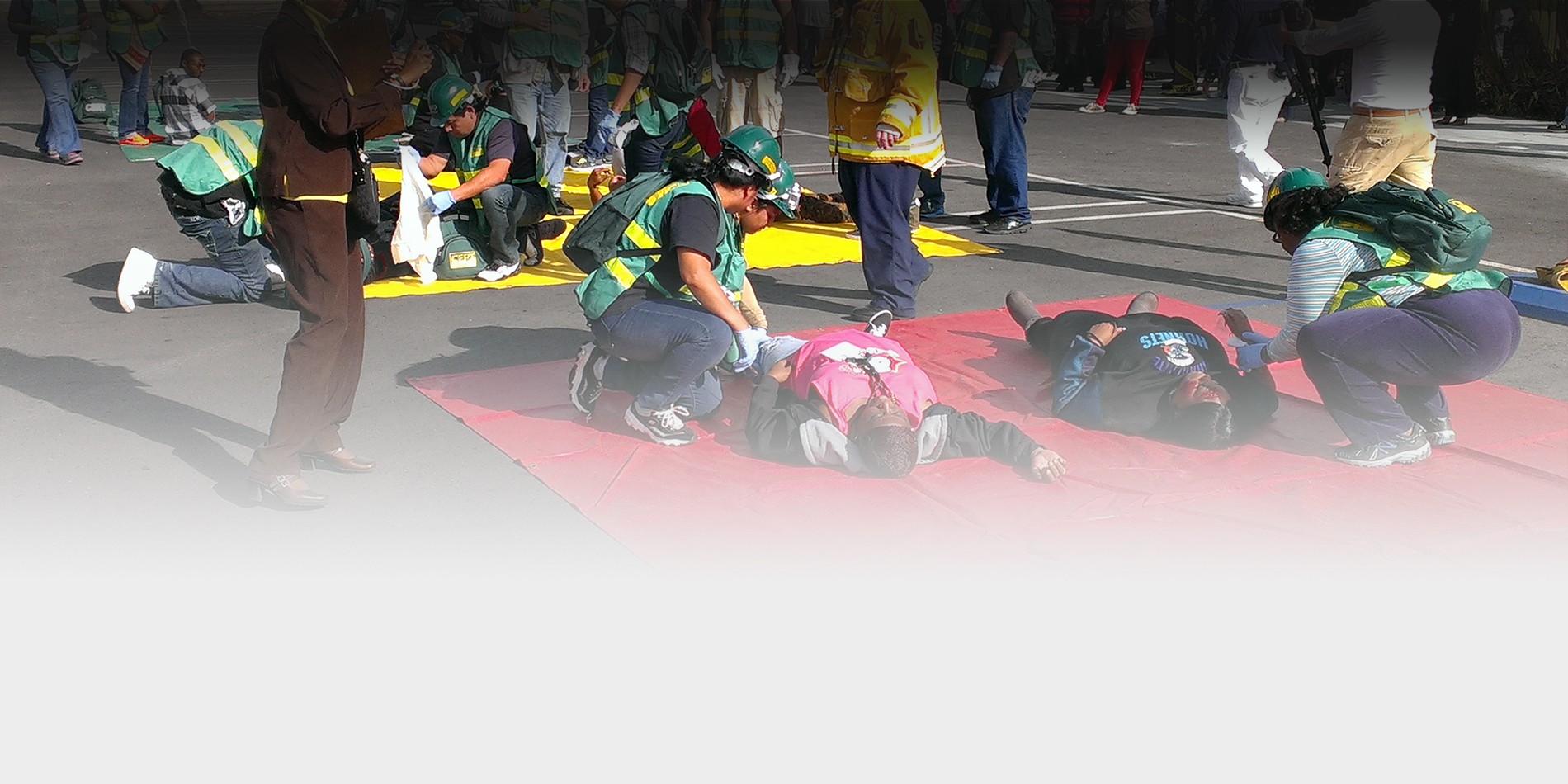
CERT teams practice life saving skills

You can even join your local Community Emergency Response Team. These are teams of citizens that are specially trained to help out in major emergencies, sort of like the reserves. Find out more here. Here is a list of CERT's by State: http://www.citizencorps.gov/cc/CertIndex.do?submitByState


Emergency Preparedness is everyone's responsibility.  Share these resources with your students, colleagues, and family.


.


Thursday, September 7, 2017

Sept is National Preparedness Month - Here are some great resources to get prepared for emergencies


It's National Preparedness Month, and start of the Hurricane Season. With all of the crazy weather we have seen, it's good to be prepared. Just look at Texas and now Florida.

It is important to consider three scenarios when planning for an emergency: 1) an escape route and meeting point if everyone is in the house; 2) what to do during a school day; and 3) how to handle an emergency during the weekend, when family members might be scattered.
Although many people are familiar with the concept of developing a family plan for emergencies, most fail to take the time to sit down and actually come up with one. One great resource is the FEMA-sponsored website: http://www.ready.gov/. Check out their kids section too: http://www.ready.gov/kids

Schools need to be prepared themselves, as well as teach their staff and students how to be prepared.

Each household, business, and school should have an emergency plan, emergency kits and people trained in emergency preparedness and response.

I started my training in emergency preparedness while on my trail to Eagle ScoutEmergency Preparedness is a required merit badge and the Boy Scouts emphasize emergency preparedness among the scouts. I am also a paramedic, special operations paramedic and FEMA trained in Emergency Preparedness and Emergency Management. Here are some of my favorite resources for learning about Emergency Preparedness.


Ready.gov is the US Government's web site for information and resources on emergency preparedness and response. There are resources for making a plan, an emergency kit, and how to stay informed. Information is included for individuals and businesses.


The Boy Scouts of America, who train all their Scouts and Adults in Emergency Preparedness, has partnered with the Department of Homeland Security to provide resources for the public on getting prepared. The site has planning resources, how to make an emergency kit, and other resources.


American Red Cross

The American Red Cross website also has information for creating an emergency plan and how to prepare for different emergencies. They also sell emergency kits (they are very good and a decent price). You can always make your own using their lists though. There is a full section on preparing schools and students. The Preparedness Fast Facts page is an excellent, one stop resource.


Emergency Management Institute Logo

FEMA (Federal Emergency Management Agency) Emergency Management Insitute
The FEMA EMI offers free, online courses for anyone to take. The courses are well done and there are plenty of downloadable materials to help you. If you pass the test at the end, you even get a certificate.

Here are a list of the courses that I think all educators should take: (I've taken these, and more)

IS-7   A Citizen's Guide to Disaster Assistance
IS-22 Are You Ready? An In-depth Guide to Citizen Preparedness
IS-55 Household Hazardous Materials - A Guide for Citizens
IS-100.Sca Introduction to the Incident Command System for Schools
IS-362 Multi-Hazard Emergency Planning for Schools


Education Administrators should also be involved in community emergency planning because schools are on the top of the list as emergency shelters and field hospitals and the building administrators know their buildings.


You can even join your local Community Emergency Response Team. These are teams of citizens that are specially trained to help out in major emergencies, sort of like the reserves. Find out more here. Here is a list of CERT's by State: http://www.citizencorps.gov/cc/CertIndex.do?submitByState


Emergency Preparedness is everyone's responsibility.  Share these resources with your students, colleagues, and family.


.


Tuesday, September 27, 2011

Leadership - from Boy Scout Leader Woodbadge Training


I am an Eagle Scout, member of the Order of the Arrow, and have been an assistant scoutmaster and merit badge counselor. I've learned a lot from Boy Scouts that I have been able to use in school, college, career, and life.

One of the training for leaders that the Boy Scouts do is called Woodbadge. I thoroughly enjoyed this training and learned things that helped me as an engineering manager and help me now as an educational leader. This is an excellent program that has even been used by corporations for managers. The basic ideas are good for any leader in any area, including education.

Here are the main topics from when I took the course:

- Knowing and using resources - Know the resources you have and use them to benefit your organization. Educational leaders should know what resources they have in their own staff.

- Communications - communication is a must-have skill for every leader. You must be able to communicate verbally, as well as written, and communicate effectively.

- Characteristics and needs of the group - knowing the group you lead, and what their needs are, is the only way to support them and give them the resources they need to be successful. Knowing their characteristics also helps you manage conflicts and help organize them.

- Representing the group - as a leader, you represent your group. You need to do this professionally and ethically.

- Setting an example - what all leaders must do - set an example for your team.

- Planning - the leader must create a plan and then help the team follow the plan

- Controlling the group - this is one that most teachers are good at (classroom management) but some leaders are not good at it.

- Evaluating - evaluate your self, your team, your efforts and actions, their actions, goals, etc.

- Effective teaching - as a leader, you must teach others so that they can be successful

- Sharing leadership - this is paramount. No leader can do everything on their own. It also works with using resources.

- Counseling - counsel your team to help them improve, to let them know when they are doing well, to help them deal with issues and problems.


The newer courses have changed some of the categories, but the basics are all still there.

Values, Mission & Vision 
Stages of Team Development and Leadership Styles 
Project Management 
Effective Communicating 
Problem Solving 
Coaching and Mentoring 
Listening to Learn 
Valuing People and Leveraging Diversity


These are leadership skills needed by any leader, no matter what profession or area they are in. Many of them are not taught, not taught effectively, or not learned or utilized by many leaders and that usually leads to failure. 

Another nice tip for education from Sir Baden-Powell, founder of the Boy Scouts:

"The secret of sound education is to get each pupil to learn for himself, instead of instructing him by driving knowledge into him on a stereotyped system" - Robert Baden-Powell, January 1912


Wednesday, March 16, 2011

Free resources for emergency preparedness education and planning


With all that's happened in the world lately, between blizzards, floods, earthquakes, and tsunami's, there should be a renewed focus on emergency preparedness. Most people do not have any emergency supplies or plans ready. Each household, business, and school should have an emergency plan, emergency kits and people trained in emergency preparedness and response.

I started my training in emergency preparedness while on my trail to Eagle Scout. Emergency Preparedness is a required merit badge and the Boy Scouts emphasize emergency preparedness among the scouts. I am also a paramedic, special operations paramedic and FEMA trained in Emergency Preparedness and Emergency Management. Here are some of my favorite resources for learning about Emergency Preparedness.


Ready Classroom is a free resource from Discovery Education that has lesson resources for teaching emergency preparedness for teachers, students and families. It has teacher and administrator tools, lesson plans, family resources, dealing with pets in emergencies, and much more. There are checklists, planning resources, lesson plans, information about different emergencies and disasters, videos, links, and more. It's a great way to teach emergency preparedness.


Ready.gov logo

Ready.gov is the US Government's web site for information and resources on emergency preparedness and response. There are resources for making a plan, an emergency kit, and how to stay informed. Information is included for individuals and businesses.


The Boy Scouts of America, who train all their Scouts and Adults in Emergency Preparedness, has partnered with the Department of Homeland Security to provide resources for the public on getting prepared. The site has planning resources, how to make an emergency kit, and other resources.


American Red Cross

The American Red Cross website also has information for creating an emergency plan and how to prepare for different emergencies. They also sell emergency kits (they are very good and a decent price). You can always make your own using their lists though. There is a full section on preparing schools and students. The Preparedness Fast Facts page is an excellent, one stop resource.


Emergency Management Institute Logo

FEMA (Federal Emergency Management Agency) Emergency Management Insitute
The FEMA EMI offers free, online courses for anyone to take. The courses are well done and there are plenty of downloadable materials to help you. If you pass the test at the end, you even get a certificate.

Here are a list of the courses that I think all educators should take: (I've taken these, and more)

IS-7   A Citizen's Guide to Disaster Assistance
IS-22 Are You Ready? An In-depth Guide to Citizen Preparedness
IS-55 Household Hazardous Materials - A Guide for Citizens
IS-100.Sca Introduction to the Incident Command System for Schools
IS-362 Multi-Hazard Emergency Planning for Schools


Education Administrators should also be involved in community emergency planning because schools are on the top of the list as emergency shelters and field hospitals and the building administrators know their buildings.


You can even join your local Community Emergency Response Team. These are teams of citizens that are specially trained to help out in major emergencies, sort of like the reserves. Find out more here. Here is a list of CERT's by State: http://www.citizencorps.gov/cc/CertIndex.do?submitByState


Emergency Preparedness is everyone's responsibility. The Japanese know this and that is one reason why the disaster over there is not worse that it is. Share these resources with your students, colleagues, and family.

Thursday, April 1, 2010

Great Educational Ideas from Colleges and the Boy Scouts


cross posted at Tech&Learning Magazine

I went to college at Worcester Polytechnic Institute, WPI, and majored in Aerospace Engineering. I worked for 10 years as an engineer before becoming a physics teacher. WPI has a unique curriculum, called the WPI Plan, consisting of 4 quarters instead of 2 semesters, 3 large projects, and course curriculum that are mainly project based. Each undergraduate has to complete a Humanities Sufficiency Project, and Interactive Qualifying Project (IQP) and a Major Qualifying Project (MQP). The Sufficiency is a 3 credit project and course sequence in the humanities which ensures that all WPI graduates are well rounded. The IQP is a 9 credit project done in the junior year which relates science and technology to society and the MQP is a 9 credit project done in the senior year similar to a Master's thesis. The project based curriculum helps students learn content and develop problem solving, communications, and teamwork skills. It also helps develop ethics and responsibility in the students. I found that my WPI education has prepared me for my career as an engineer, as well as an educator, and served me well in many capacities.

This is the type of plan I try to use with my Physics students. I try to do as many labs, projects, and activities as I can because I know how well that works. The students are more engaged and tend to learn and remember concepts better. Project based learning is been proven to be a great way to educate students. In fact, WPI has done research on this topic. My IQP was on the quality of technical education in the US and we found that the students who did best in STEM (science, technology, engineering, math) majors and careers were the ones who had a good background in high school, including collaborative projects. Other research at WPI has shown the same thing. Many educators and educational institutions also have shown that project based learning is a very effective way to teach and learn STEM topics.

WPI's Mechanical Engineering Department also has a great classroom called the Discovery Classroom. It is a lecture-style room with large tables for the students. It has multimedia capabilities, laptops for the students to use, and a room off to the side which contains equipment for demonstrations. This took a plain lecture hall and turned it into an interactive learning room.

WPI also has some great programs for incoming freshmen to introduce them to the school and STEM topics and help prepare them for the rest of college. High Schools would do well to have similar programs that would help freshmen obtain the skills necessary to be successful in high school.

Other colleges have similar programs that emphasize group projects, the interaction of technology and society and a base in the humanities. High schools have also been moving more and more towards project based learning because it has been proven to work.

K-12 education should take notice of some of the great and innovative things that colleges are doing and adapt them to their own schools. Many colleges have K-12 outreach programs and schools should take advantage of these.

I am also an Eagle Scout, which is the highest rank in the Boy Scouts. I learned a lot in the Boy Scouts besides certain skills in camping, hiking, and the like. I learned how to work as a team, how to be a leader, and how to plan things. In Boy Scouts, the adults are advisors and the scouts do the planning and running of events, training, and campouts. As an Assistant Scoutmaster, I worked with a group of 5 boys who planned and carried out a Camporee for over 500 scouts. The Boy Scouts aren't afraid to let the boys take charge and lead. The adults will step in when necessary, but the boys learn a lot by their mistakes too. The older, more experienced scouts help teach the younger, newer scouts. Discipline is also handled by older scouts and things run very smoothly.

I think schools should do more to let students make decisions and run things. Let the students come up with ideas for lessons, projects, programs and more. Let them lead these projects and have the teachers advise them. The students will learn valuable skills and feel what it is like to take charge of a situation. Have students teach and tutor other students. Have upperclassmen be mentors to the underclassmen.

Some schools already do these things, but others would do well to look outside for ideas for new and innovative programs. Colleges, youth groups, the military, and even business and industry have plenty of great programs and ideas for doing things. Many of them can be brought into K-12 education and can be used to improve student engagement, achievement, and skills building. We have a large number of problems in schools now, and educators have to be creative in coming up with ways to address them. Look to these other organizations for ideas and help. We don't have to do it on our own.

Please share your ideas of things from outside education that could be used inside education.

Resources/more information: http://educationaltechnologyguy.blogspot.com/2009/05/how-to-get-started-with-project-based.html


LinkWithin

Related Posts Plugin for WordPress, Blogger...