Showing posts with label aerospace engineering. Show all posts

Tuesday, March 6, 2012

Microsoft Flight Simulator now Free! Great STEM Resources


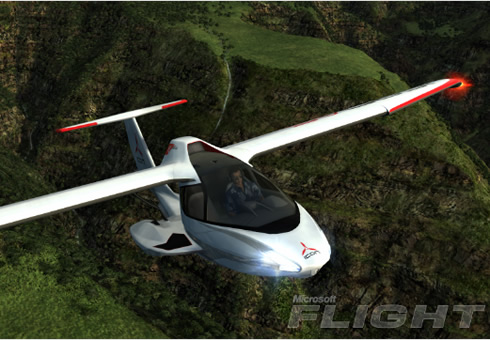
Microsoft Flight Simulator is now available for free. The free version includes tutorials, online and offline play, aircraft, missions on Hawaii. You can pay to get more aircraft, missions, scenery, and other content.

The tutorials are great and it is easy to get started.


I took pilot lessons in college (almost got license too and then instructor graduated. Will try again soon!) and Flight Simulator was a great way to practice and train.

This is a great resource to have students explore the science of flight and aircraft while having fun.

Aerodynamics, Forces and Newton's Laws, Lift, Drag/Friction, Thrust, Controls.


Wednesday, February 29, 2012

Free Aerospace Simulation App - made by educator


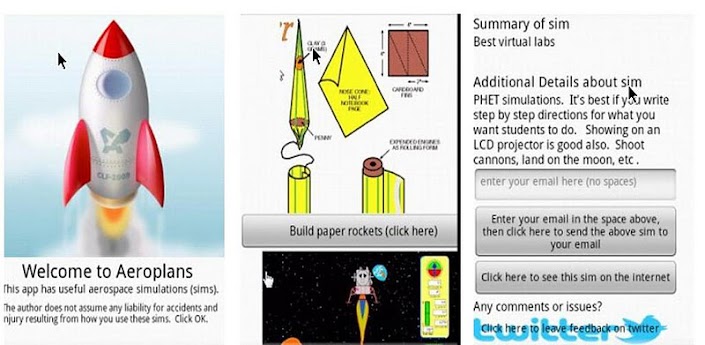
Stephen Hall, and educator and aerospace enthusiast, participated in NASA's Aerospace Professional Development program and then created Aeroplans, a free Android app. The app includes aerospace simulations and instructions for different activities, along with links and information about aerospace topics.

I've been using it for a day or so and it's a fun app and educational.

Aeroplans

Get Aeroplans from the Android Market.


Related:

NASA Simulation based Aerospace Resources for Educators

More great educational resources from NASA

STEM Resources for Educators and Students

NASA Simulation based Aerospace Resources for Educators


NASA's Simulation Based Aerospace Engineering Teacher Professional Development Program is a program geared towards helping educators become skilled in teaching engineering concepts. The program includes education materials, teacher internships, and industry and higher education partnerships. The program offers US STEM teachers the opportunity to work beside NASA engineers and mentors. It is focused on aeronautics modeling and simulation and teachers explore cutting-edge technology, aerospace engineering concepts, and develop hands-on lessons.

The site has lessons from previous sessions that teachers can download and use. The lessons include the simulation and lesson plan. The resource section has downloads, information on simulations, more lesson examples, and other STEM resources and links.


Related:

More great educational resources from NASA

STEM Resources for Educators and Students

Monday, January 9, 2012

NASA - Orion Multi-Purpose Crew Vehicle site


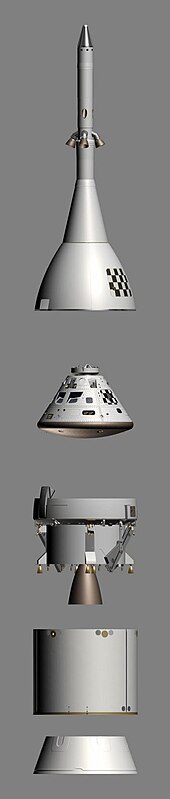
NASA, which already has tons of great resources for education, has a great site about the Orion Multi-Purpose Crew vehicle. The Orion MPCV is the future for American manned space flight. It will be the exploration vehicle that will carry astronauts to space and then return them.


The site has information on the MPCV, information on the design, construction and engineering of it, and cut away views of the space craft.

This is a great way to get students excited and interested about STEM subjects and talk to them about the future of manned spaceflight.

Related:

NASA Education Resources


Friday, December 2, 2011

Aerospace Students - resources for all aspects of Aerospace Engineering education


I seem to be on some sort of roll, or in a rut, and keep finding and posting about STEM resources for educators and students.

The newest one is specifically for Aerospace and is Aerospace Students. The site is the "home for future Aerospace Engineers". I'm a little bit biased as I was an Aerospace Engineer.

The site has a variety of resources and information and including a study guide. Then, for each year (1st - 4th) it has "courses" based on different subjects the future aero engineer would be studying. For example, the Introduction to Aerospace Engineering course has links, videos, exercises, formulas, and more.There are classes on aircraft structures, calculus, engineering drawing, materials, aerodynamics and much more.

These resources can be used by students or educators in full as an engineering program or in part to integrate into other classes.

The materials are of high quality and are easy to use.


Related

Engine Education - great resource from Pratt&Whitney on how engines work

Tuesday, June 14, 2011

Animated Engines - animated illustrations explain workings of engines


Animated Engines is a site by Matt Keveney that has some great animated illustrations of a variety of engines that shows how they work. In addition to the animation, there are step by step explanations of how the the engine works and even some history of that type of engine. 


Engines include 2 and 4 stroke internal combustion engines, diesel engines, Wankel, Atkinson and Gnome engines, Jet Engines include rockets, turbojet, turbofan and turboprop, and a variety of steam engines. 


The animations are nicely done and do a great job of explaining how the engines work. 


This is a great site for pre-engineering, engineering, and science classes. 


Related Article

Engine Education - great resource from Pratt&Whitney on how engines work

Wednesday, May 18, 2011

Rockets - a great project for the end of the year for any class


I love rockets. My Bachelor's degree is in Aerospace Engineering and I've been interested in rockets since I was a kid. My dad worked on the main engines for the Saturn V rocket when he worked at Pratt & Whitney as a chemist, I've designed and manufactured parts for the space program as an engineer, and my senior project in college was designing a two-state-to-orbit space vehicle. I've found that all kids seem to have some interest in rockets and I use that as a great end-of-the-year project in my physics class.

Cover of the Rockets Educator Guide+

I found a great resource from NASA - The Rockets Educator Guide - that includes lesson plans and activity ideas. NASA's site is a great resource for this type of project. This guide has some great activities like rockets using film canisters, baking soda, and vinegar, paper rockets, altitude trackers and more. There is even a part on the history of rockets.

This week, I was able to show one class the live launch of the Shuttle Endeavor on NASA TV, which is currently showing video of a space walk. I also use the video from Rush's "Countdown" song.


I start the project with a video of a shuttle launch and Rush's Countdown song (written after they viewed a shuttle launch in the 80's). Then the students do a webquest on NASA's site that explains the science of rockets. We also discuss rockets and space flight and then start linking the topics we've done in the past to this project. I also bring in the chemistry behind solid rocket engines.

 Present Day -- Space Shuttle

The students then get model rocket kits and build the model rockets. The rocket kits are challenging and call for the students to read and understand the directions and figure a few things out for them selves. They have to perform a stability test on the rockets and then calculate the predicted altitude. When we launch the rockets, we use altitude trackers and some trigonometry to find the actual altitude and compare it to the calculated altitude. We then talk about what could have caused the discrepancies.

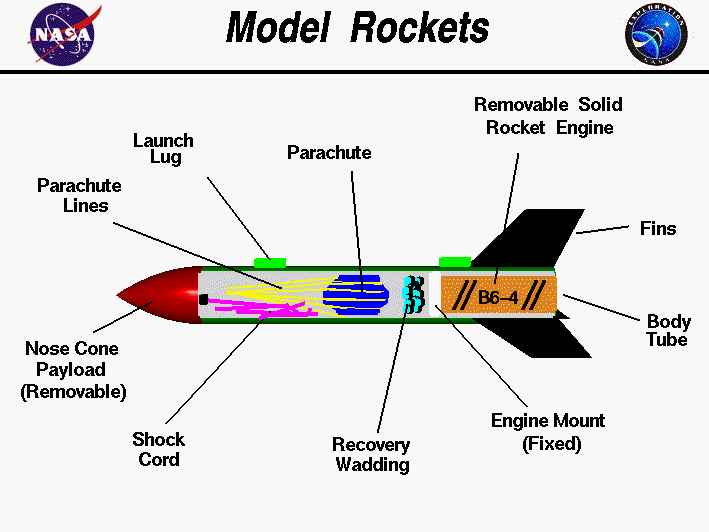
Computer drawing of a model rocket with the parts tagged.

You can extend the unit and do more activities from the educators guide. You can also have students research space missions, current spacecraft, and the future of space travel.

Discovery Education Streaming has some great videos and resources, including the "NASA at 50", "Bill Nye Great Inventions" and "When We Left The Earth: The NASA Mission" series.

The students learn a lot, see an application of what they have learned, work as a team, and have some fun. It's a great way to end the year.

Topics in this unit:
history of rockets
transportation
energy transformations
fluid dynamics
thermodynamics
aerodynamics
chemistry of solid fuel engines
stability
Newton's Laws
Gravity
air resistance

Skills:
Teamwork
communication
reading comprehension
manual dexterity
application of knowledge
problem solving
math

Resources needed:
computer with internet to connect to NASA website
NASA Rockets Educator Guide - free
Model rocket kits, engines, and launcher (available from a variety of companies and suppliers. I use Estes).
(funding for these supplies have been through Donor's Choose and an Air Force Association classroom grant).


Rockets resources:
NASA's Beginners Guide to Rockets: http://www.grc.nasa.gov/WWW/K-12/rocket/index.html
Estes Model Rockets - Educator Page: http://www.esteseducator.com/
Apogee Rockets - http://www.apogeerockets.com/ (click on "Educational")
National Association of Rocketry: http://www.nar.org/teacher.html

Tuesday, March 29, 2011

Engine Education - great resource from Pratt&Whitney on how engines work


Engine Education is a resource from Pratt & Whitney, makers of turbofans, turbojets, turboprops, and rocket engines.

The site has four different animations that explain how the different types of engines work: turbofans, rocket engine, turboprop and land based turbine engine (generates electricity).


The animations are well done and explain the concepts in a way that all students can understand.

This is a great resource for science classes and could also be used in other classes to get students interested about these topics.


Note: I worked for Pratt & Whitney many years ago in my previous life as a Aerospace Engineer.

Monday, October 4, 2010

NASA Aerodynamics resources - good for all classes!


NASA's Glenn Research Center has a huge amount of resources for teachers to use in class. The Aerodynamics section is truly amazing. 


They have Science Fundamentals (Newton's Laws, Equilibrium, Torques, Phases of Matter), Math Fundamentals (Area, volume, vectors, trigonometry...), Airplane parts, Aerodynamics, Model Rockets, and much more. 


Many of the topics are set up in a lesson type format. Students can just click "next" to proceed through the section. There are even interactive demos and simulations available. And all of it is for free.


They also have the Beginner's Guide to Aeronautics (BGA) which was created as a Web-based "textbook." The creation of the BGA is a research project to explore the use of the personal computer and the Internet to present educational materials to students, teachers, and lifelong learners in a more interactive way than a printed, bound textbook.


The material is good for Middle and High School students, but teachers can use parts of it for any level of class. 


I use it as a great primer on Newton's Laws, and also use it for our Rocket's lesson at the end of the year. The nice thing is that when you apply all of these topics to aerospace topics, the students are more engaged than they would be by the topic itself. 


Some more NASA Education Sites:

Share your NASA resources with us!


Tuesday, December 29, 2009

Technology in use in Engineering


I have a Bachelor's degree in Aerospace Engineering from Worcester Polytechnic Institute and I worked for 10 years as an engineer before becoming an educator. I still do some consulting and keep up to date in the field. With all the talk about educational technology, I thought it would be nice to share some of the technology currently being used by engineers so that educators have an idea of what college students will be learning.

Engineers, like everyone else, use office productivity tools (MS Office, Google Docs), email, and the internet. In fact, the internet is one of the engineers' best tools. Research, online catalogs from vendors, online reference guides and calculators, and discussion groups and forums are all used on a daily basis.

Computer Aided Design (CAD) is the next major technology that engineers use. Products are designed in 3D on the computer, analyzed, fit checked, and simulated before prototypes are even built. Multi-physics simulation software, Finite Element Analysis, and Computational Fluid Dynamics software are critical to being able to design, analyze, and test products virtually before spending more money on manufacturing and live testing. They can analyze and simulate almost everything that a product would go through, virtually.

There is also Bill of Material (BOM) software to keep track of all the pieces and parts, Manufacturing software to help the engineers figure out the best way to build a product and then programming the equipment to do the work.

3D printers are used to make functional models of the product for early testing. They either strip away material, or lay down material (a plastic) to create the parts. These 3D printers can fit on a desktop. There are also 3D scanners that can be used to take a real part and turn it into a 3D model in the computer.

When I worked at Sikorsky Aircraft, we did everything on the computer. Design, analysis, simulation, manufacturing layout, communications, coordination, and more. Even our manuals and references were all online. If we printed something out, it had a watermark on it saying that the computer network should always be checked for updated information.

Computers and software have always been important in engineering, but as computers have gotten more powerful, so has software and the tools that can be used. Things change quickly, so engineers have to be able to learn new software and tools on their own.

As a high school physics teacher, I teach 90% seniors. This means that I am usually the last science teacher that they will have in high school (they may be taking two sciences). I try to expose them to project based learning (how WPI does things and how engineers work) and different types of software and systems that are out there for science and engineering. I try to teach them how to do their own research and how to learn things on their own, because I know that is what they will need to be able to do in college and in the workplace.

I also try to encourage students who are interested in and good at science to look at engineering as a career. Our world needs more engineers to solve the world's problems and continue with improving our standard of life.

Engineering is obviously not the only career field using technology - medicine, manufacturing, even retail, all use technology in ever increasing ways. This means that the more our students are exposed to technology, the better prepared they will be for college and the workplace.

More information on engineering and engineering resources for educators:


Wednesday, October 7, 2009

Engineering Resources


Engineering is a very important career for our world, yet enrollment in engineering programs is decreasing, especially by American students. I was an Aerospace Engineer (WPI '92) for 10 years before becoming an educator and I try to encourage my Physics students to go into engineering. I am also a CPEP teacher. CPEP is an after school program in CT for students interested in engineering. CPEP provides curriculum and materials to give students hands-on project experience.


Local companies are also a great resource for educators. Have engineers come in to your class and talk about what they do. Take a field trip to the company's facility. I am lucky to have Sikorsky Aircraft nearby. The engineers are really good about coming into schools and the company loves to have groups come in for a tour. Some smaller companies in the area have also been great resources, including Alinabal.


I have compiled a list of engineering resources for educators. Each of these sites have information about engineering, the career, and educational resources. I have found them all to be great resources. One not on the list is NASA. NASA also has great educational resources, many of which are geared towards engineering.


Dept of Labor, Bureau of Labor Statistics, Occupational Outlook Handbook, Engineers - great information about the career, job outlooks, salaries, and more.


American Society for Engineering Education - great resource with information about all types of engineering, educator resources, and more.


Engineering - Go For It! - this site is produced by the ASEE (see above) and is completely devoted to promoting engineering. It has resources for educators and students, as well as lessons and career exploration resources.


American Institute of Aeronautics and Astronautics - has resources for aerospace engineering careers. Educators can join for free and get even more resources.


Society of Automotive Engineers - has resources about engineers dealing with the automotive industry.


Institute of Electrical and Electronics Engineer - resources about engineers in the electronics and electrical engineering.


Engineering Challenges - this site lists and explores the greatest challenges facing engineers in regards to world issues. This is a great site to use as a starting point for your own classroom projects.


Discover Engineering - another great site that explores engineering as a career.


Connecticut Resources:


CT Business and Industry Association - CBIA has an education section. They have a great resource about Engineering. The site also has videos you can show to your students.


Next Generation Manufacturing Center - this is a cooperative group of manufacturers, CBIA and CT's Community Colleges. They work to get more students interested in engineering and manufacturing. There are some great videos on the site, too. They have a lot of great programs, including the Engineering Challenge. They also sponsor summer externships for teachers. These externships pay teachers to spend the summer at a local manufacturing company learning about their industry and coming up with ways to get more students involved in engineering and manufacturing. I was able to participate two years ago and found it to be a great experience.

Please share any resources you have and spread the word to your students about engineering. Even the President has said that students should avoid careers as lawyers and accountants, and instead look at engineering, science, and education.


Sunday, October 4, 2009

Ask Polaris - Engineering Career Help


Ask Polaris is a site set up by a variety of Aerospace organizations, including AIAA, AIA, and FAA. The site is a great resource for students who are interested in Aerospace Engineering and also has information on engineering in general. There is information on college selection, college admissions, high school preparation, and career guidance. There is also a section for parents.

Each of the cooperating organizations also have educational sites.

This site is a must see for any student interested in engineering, especially in the aerospace field.

(I'm a little partial to this as my undergrad degree is in aerospace engineering and I worked as an aerospace engineer for 10 years before becoming an educator.)


LinkWithin

Related Posts Plugin for WordPress, Blogger...